
Tyler Kline and the Sednacene: Art for the Tentacular Epoch
Rumi Arden
“The invention of the ship was also the invention of the shipwreck.” – Paul Virilio, Art and Fear¹
In the luminous, precarious architectures of Tyler Kline, we are confronted with an artistic practice that is about transmission—an art that feels like a signal from the future, composed in the final, flickering moments of the Anthropocene. Across sculpture, AI-assisted video, and immersive installation, Kline’s work proposes entry into a speculative epoch he names the Sednacene: a world blooming from the Anthropocene and Donna Haraway’s Chthulucene², where human, machinic, and ecological consciousness interpenetrate.
I. The Sednacene as Speculative Framework
Kline’s concept of the Sednacene is not a utopia, but a temporal bridge: an imagined period in which humanity, having survived or transfigured itself amid climate cataclysm, participates in distributed intelligence and interspecies kinship. It is a cousin to Haraway’s Chthulucene, where earthly entanglements replace anthropocentric narratives². Yet, the Sednacene expands the field to post-terrestrial imaginaries, integrating interstellar migration, quantum field speculation, and AI‑assisted cultural communion.
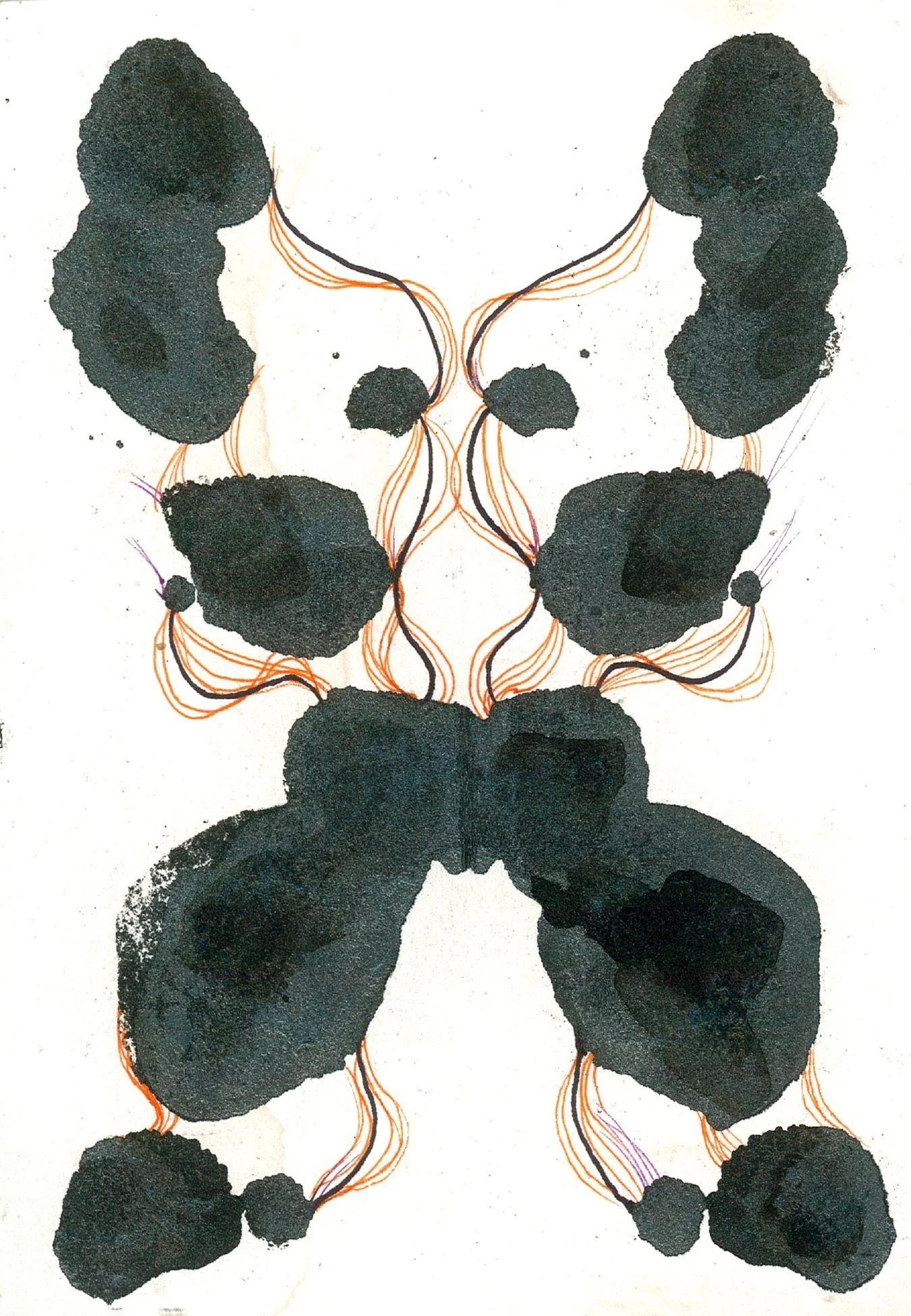
Kline’s early works—Celestial Subterrane (2012), Continuous Warlock Integers (2015), Geistdenkenheit (2017) and The Golgi Apparatus (2018)—already hint at this epochal thinking. Their assemblages of foil, wire, cast bronze, and scavenged infrastructure oscillate between ritual shrine and prototype spacecraft. In this tension, his objects enact what Reza Negarestani describes as “cosmic craft”: art that gestures toward exteriority, surrender, exile, and the unhuman horizon³.
II. Material Strategies: Ruins in Reverse
Kline’s sculptural vocabulary alternates between fragile, provisional matter and ceremonial durability.
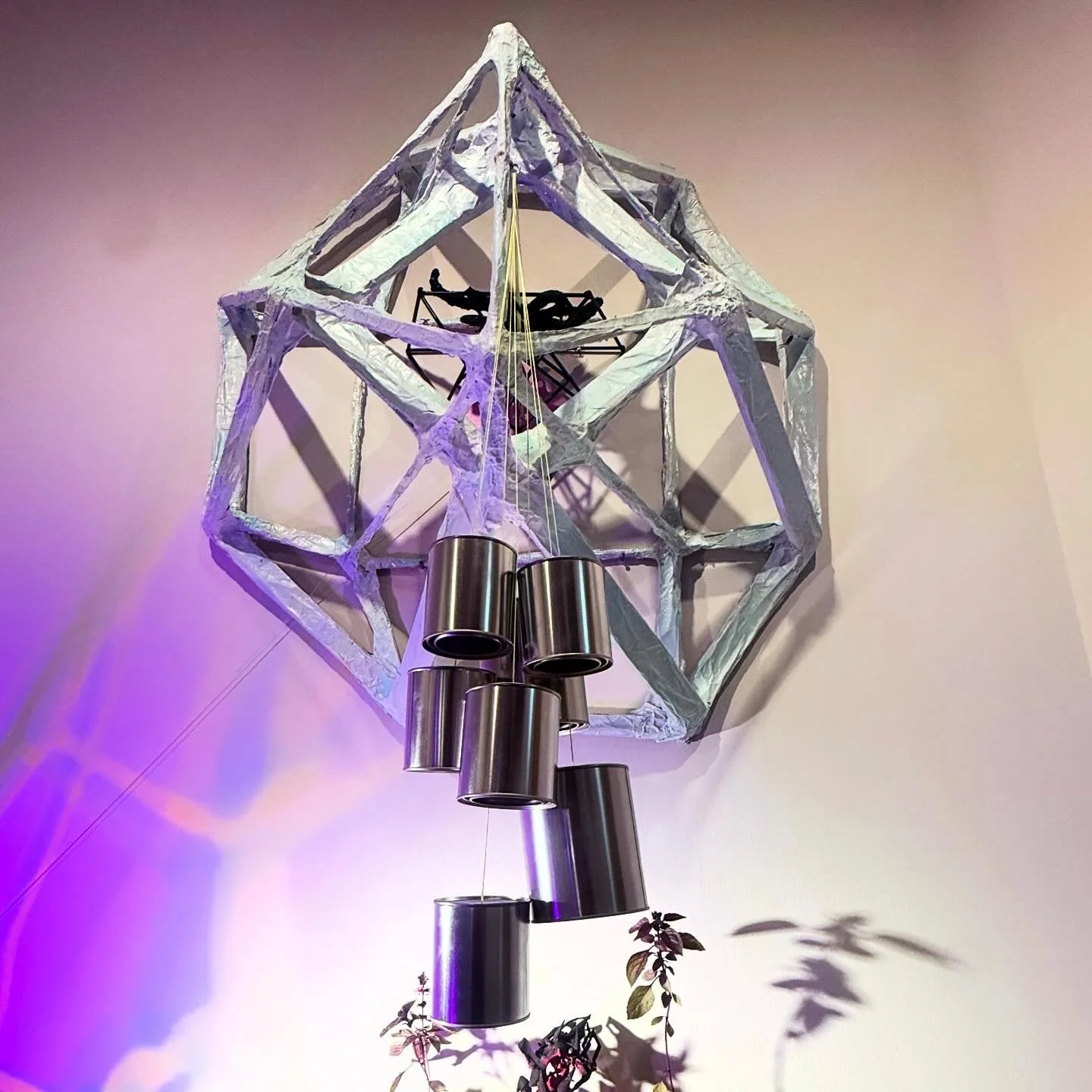
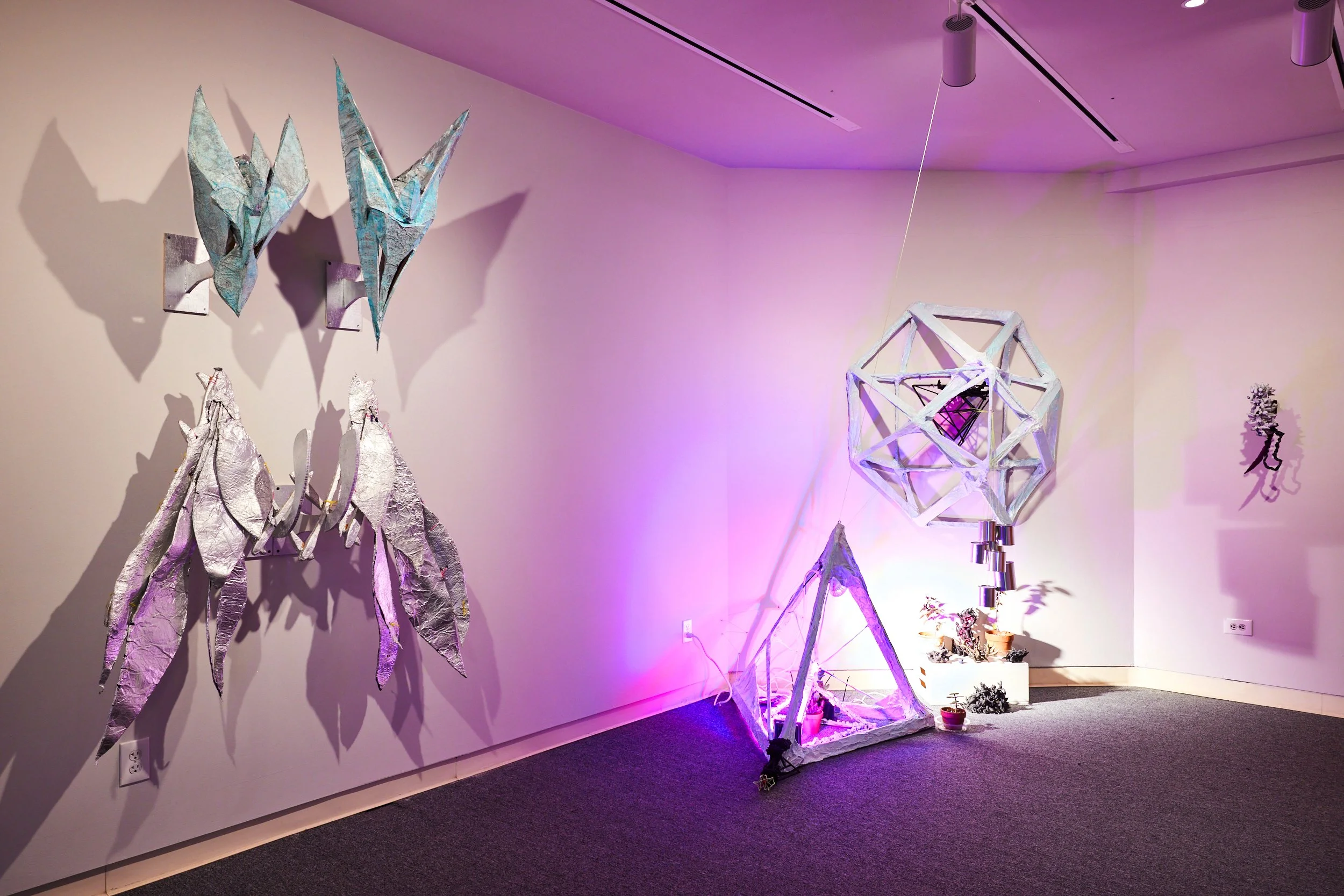
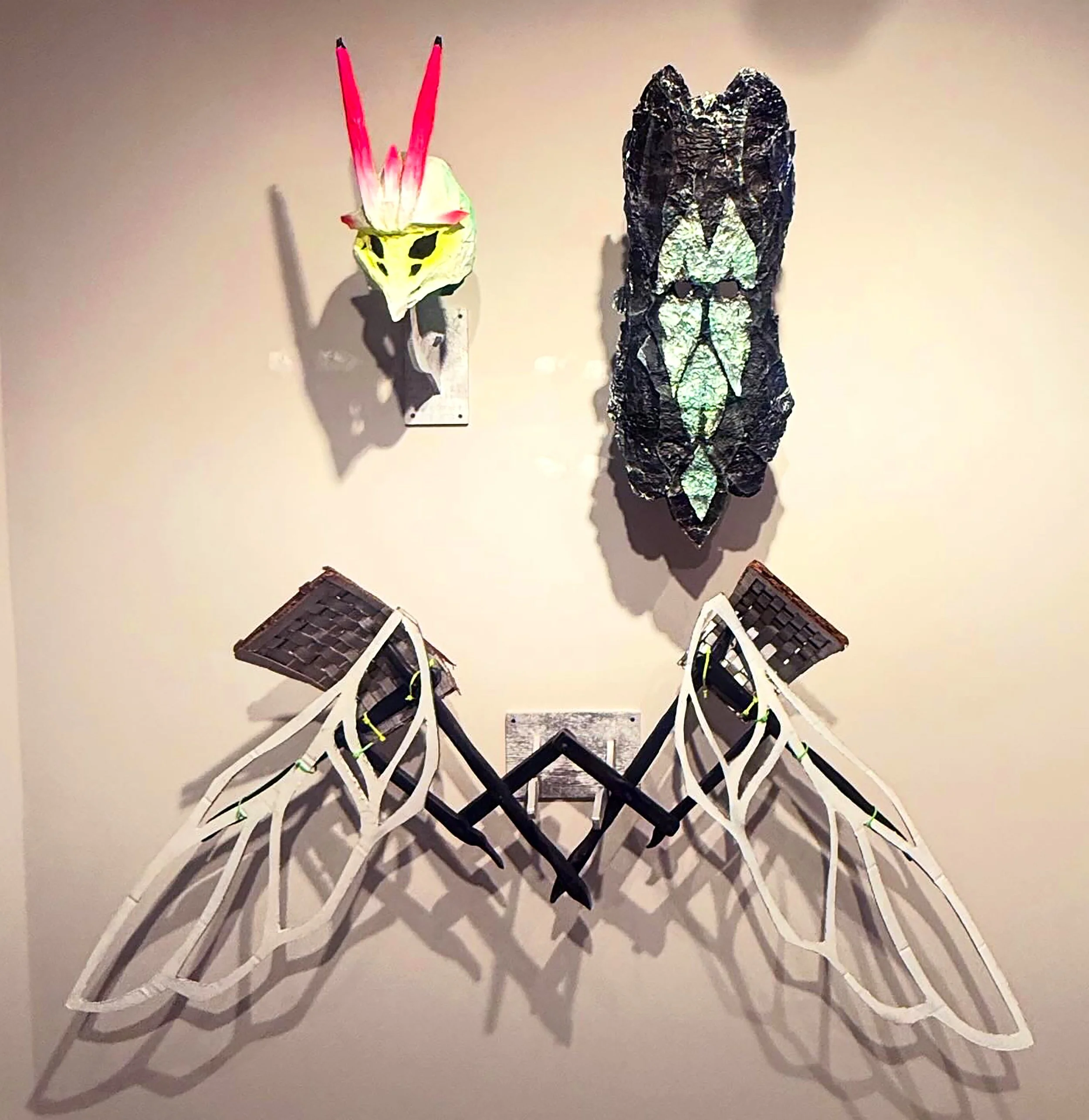
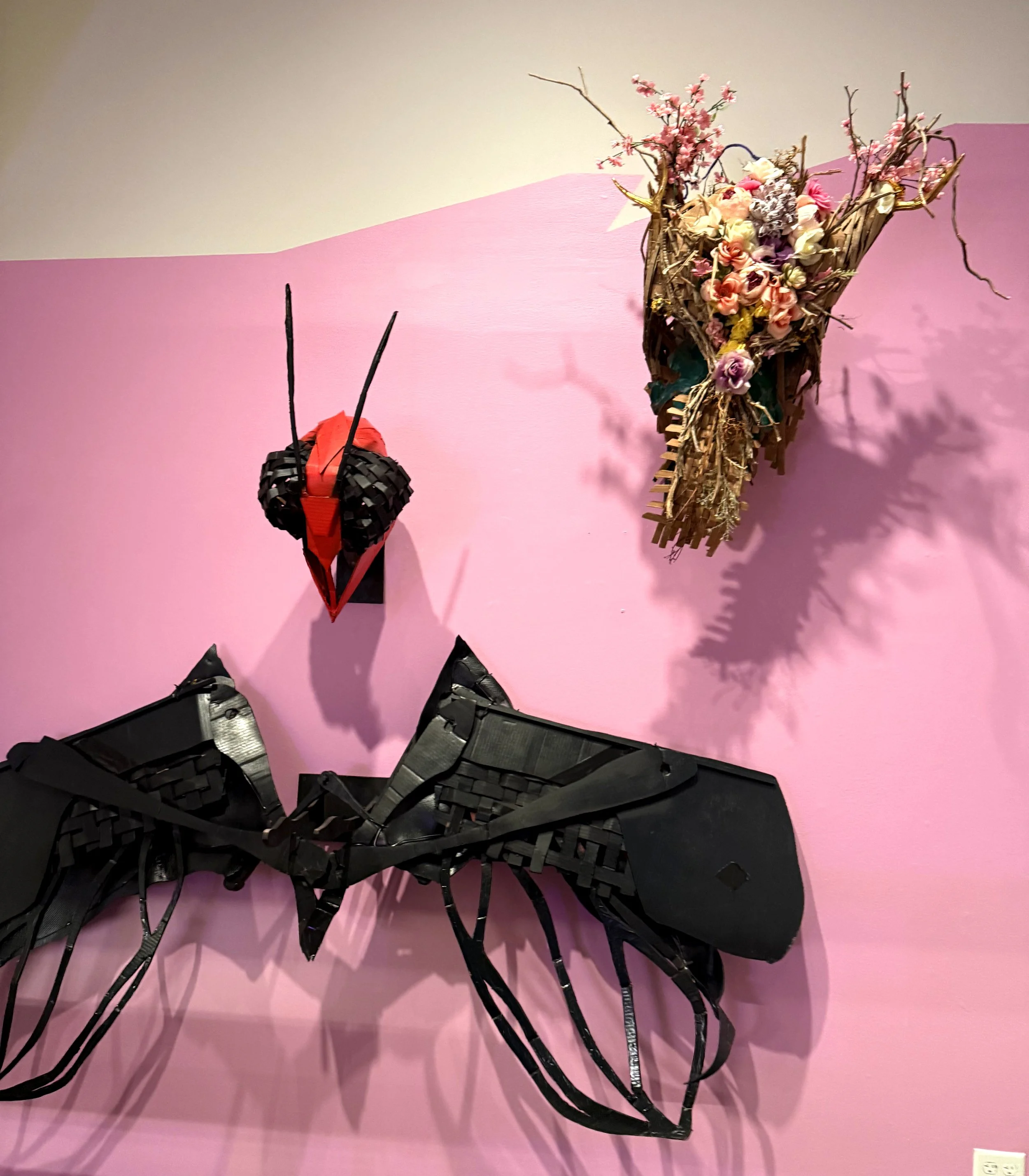
Aluminum foil, cardboard and PLA: Ephemeral signals of the present, evocative of DIY survivalism and glitch aesthetics.
Bronze and carved wood: Materials of deep time, recalling votive offerings and spacecraft heat shields alike.
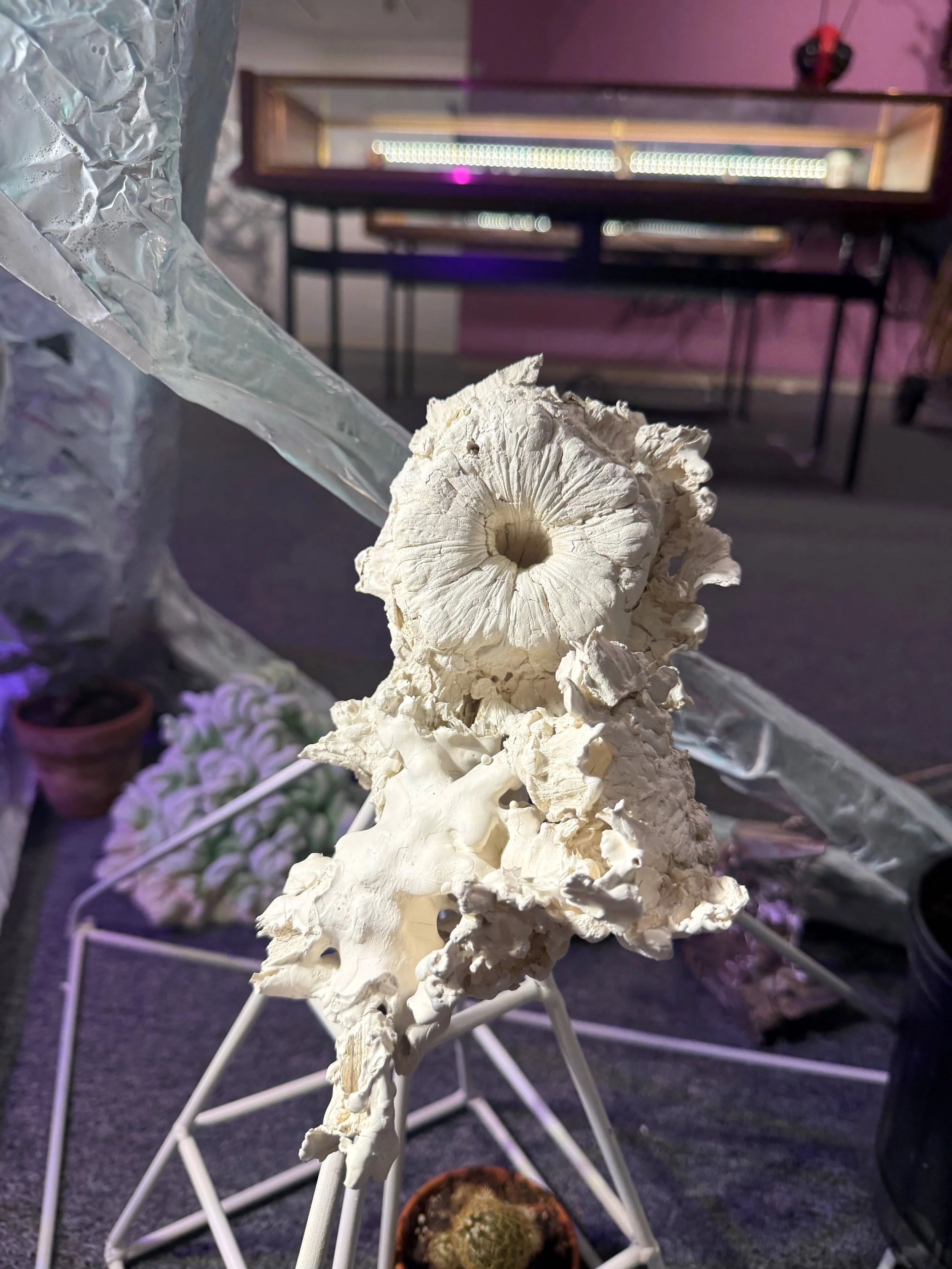
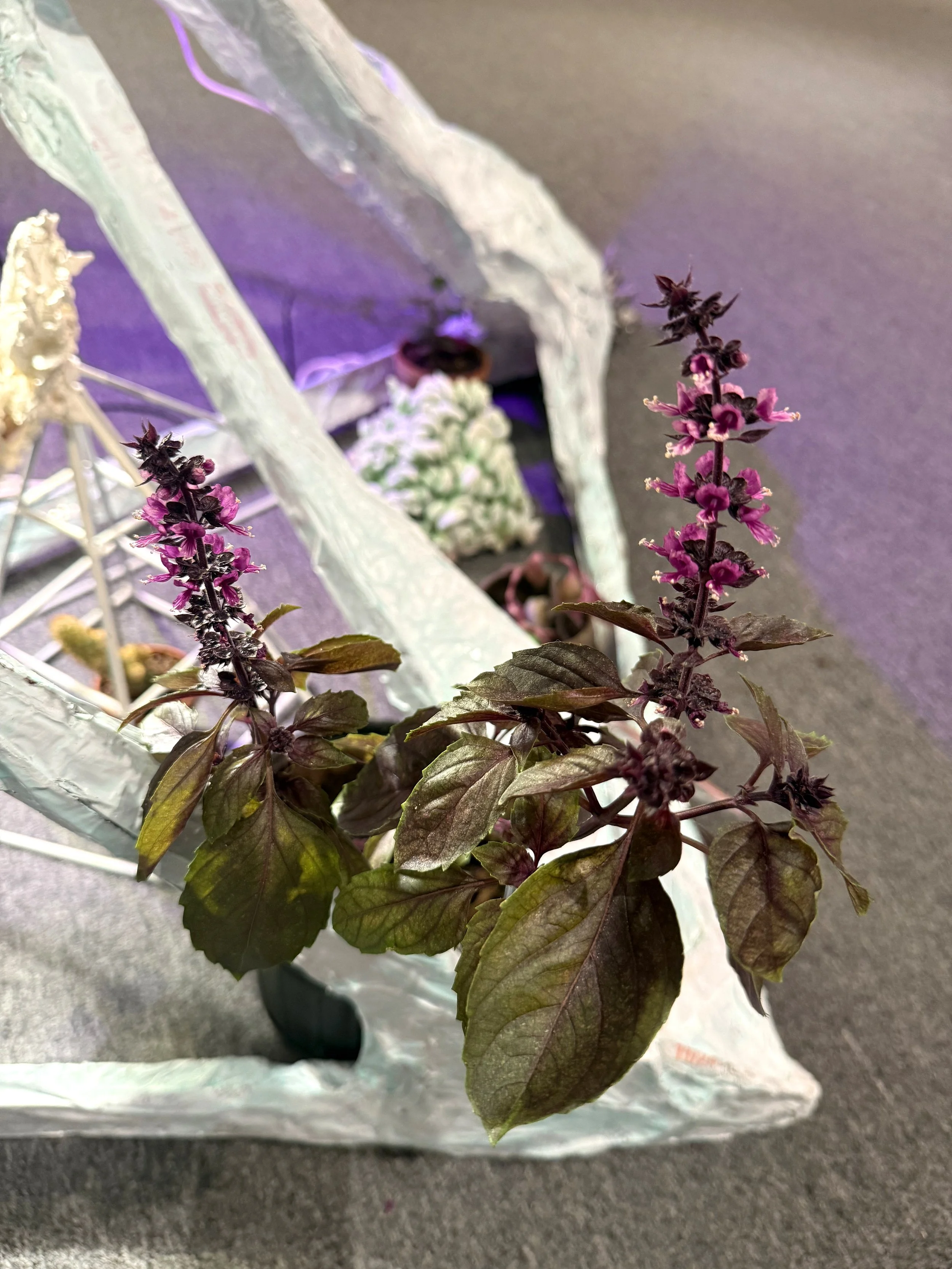
Ceramic, brick, and plants creating pollinator corridors in post industrial correlative communities as rejuvenation and interdimensional signaling.
By fusing these, Kline produces “ruins in reverse”—objects that feel like messages arriving from a future civilization, not remnants of a lost one. This gesture aligns with Virilio’s notion of “integral accident”—that all technologies contain their catastrophe¹. Kline’s works seem to preemptively mourn and mythologize our own survival and rejuvenation strategies.
III. Post-Human Face
Kline’s recent practice ventures into AI‑assisted portraiture, a process that blurs the boundary between likeness, imagination, and algorithmic co-authorship. Sitters are first photographed; these images are transformed by trained AI models into hybrid avatars that suggest interstellar or interspecies kin, and are then returned to the tactile world via oil paint.
This recursive cycle—photograph → AI hybrid → painting → re‑input to AI—functions as an aesthetic feedback loop, producing portraits that feel post-human, distributed, and ceremonial. Each face becomes a liminal emissary of the Sednacene, as if the portrait were no longer a private likeness but a node in a planetary consciousness network.
Such work resonates with N. Katherine Hayles’s reflections on the post-human subject as “an amalgam, a collection of heterogeneous components, a material-informational entity whose boundaries undergo continuous construction and reconstruction.”⁴ Kline’s portraits literalize this fluidity, capturing the migration of selfhood beyond anthropomorphic concerns, pointing towards rejuvenation as a trans-species endeavor.
IV. Immersive Installations as Communication Apparatus
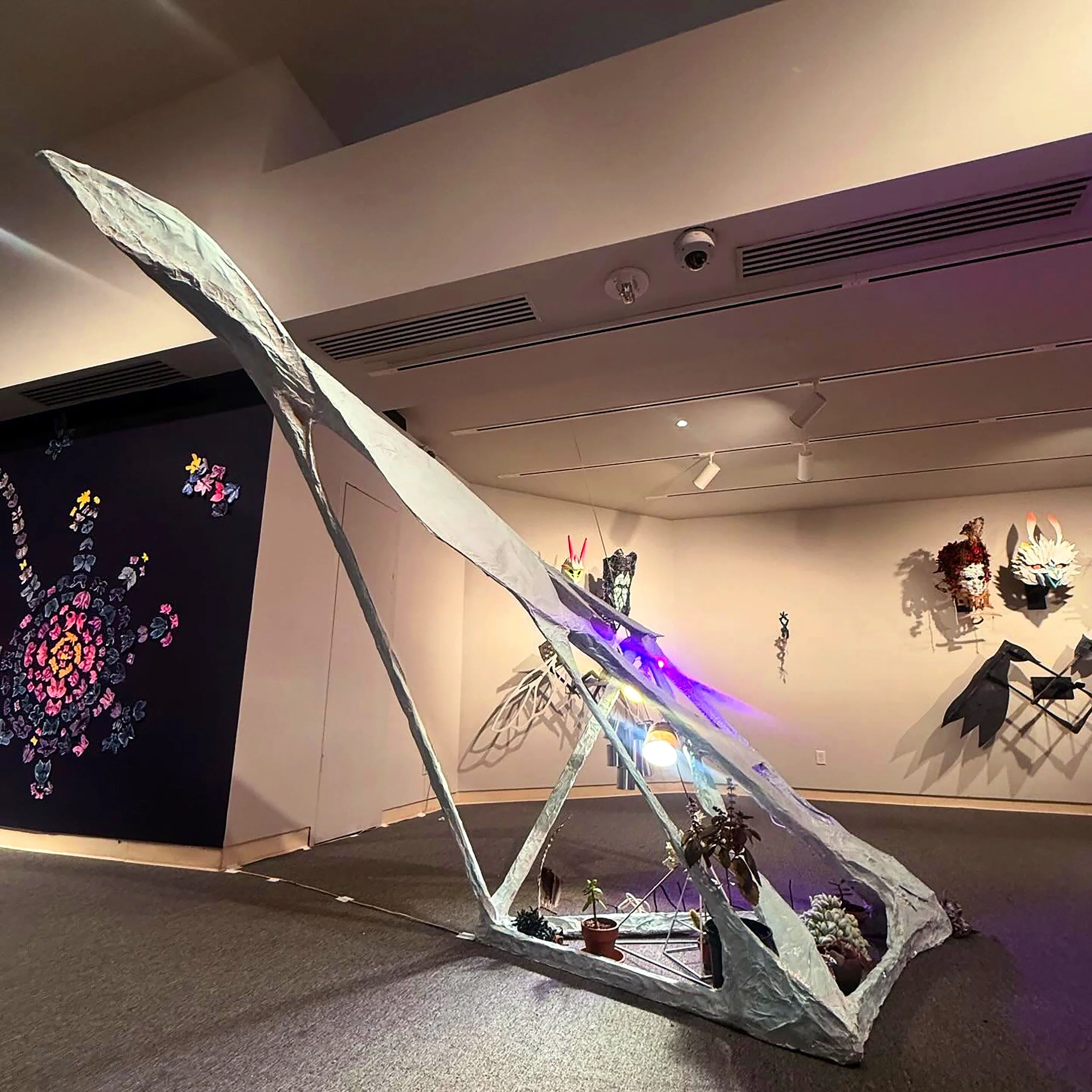
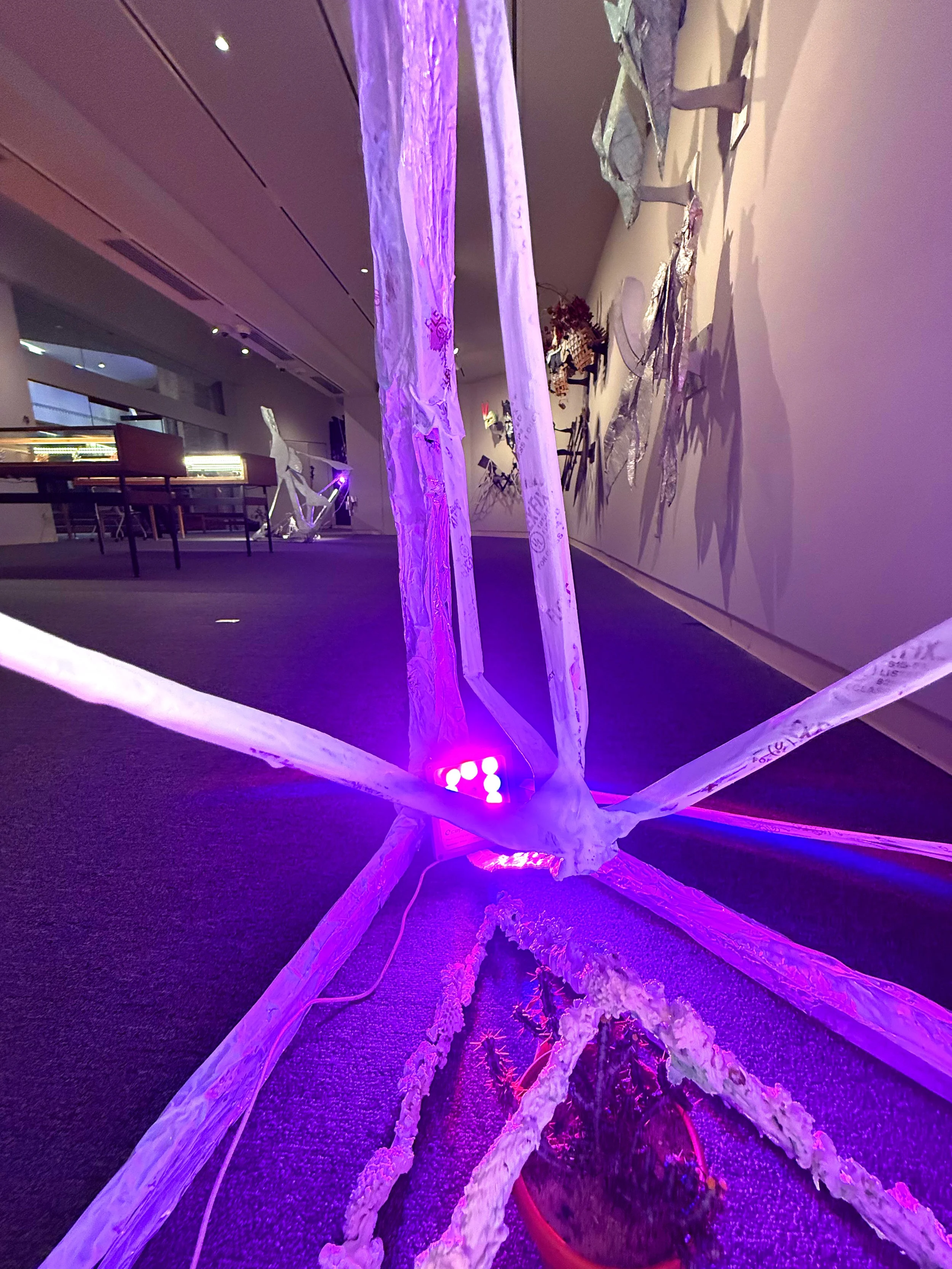
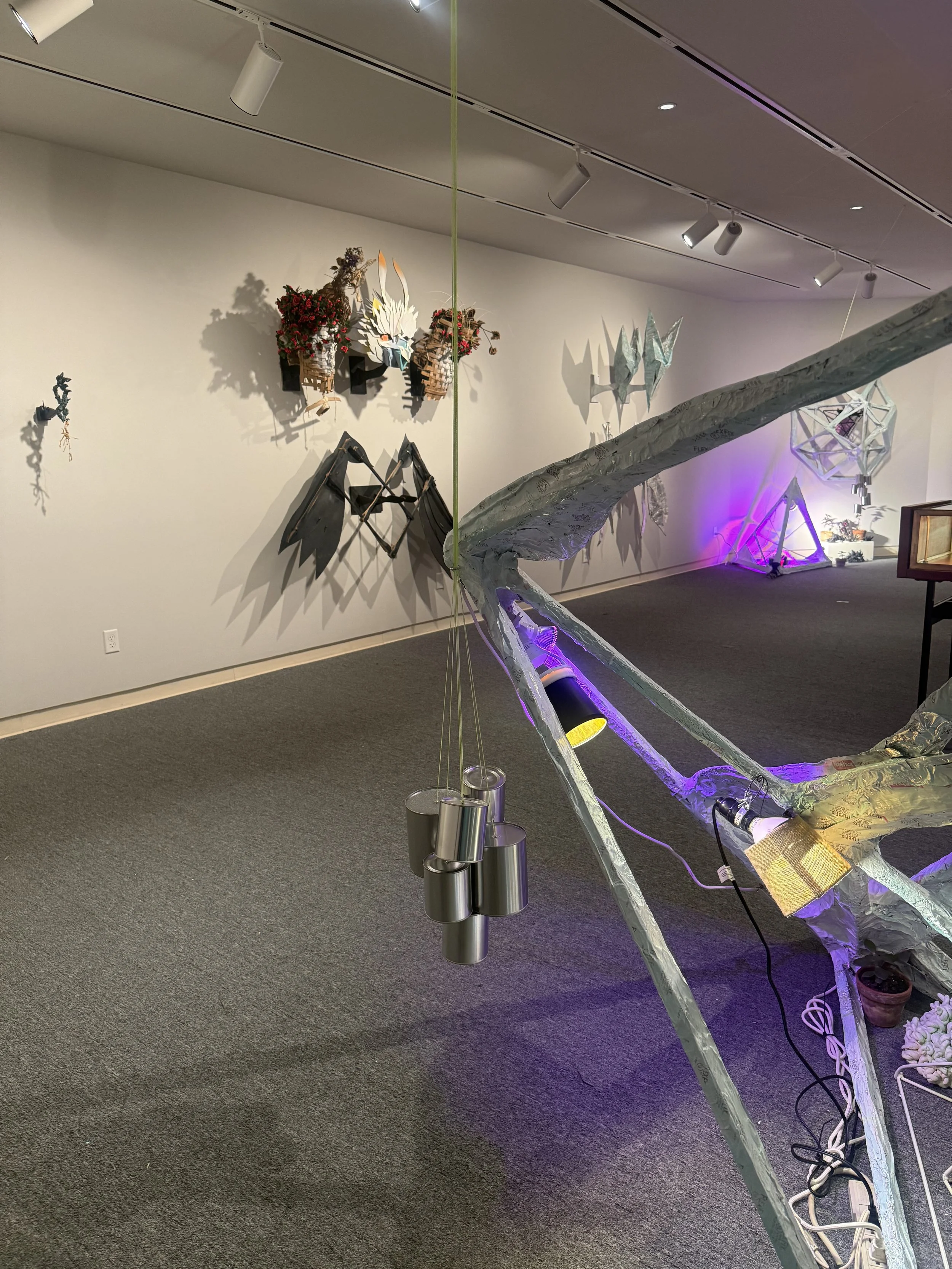
The “Solar Moth” installation—Kline’s forthcoming gallery‑wide sculpture and spaceship‑greenhouse—is the most complete embodiment yet of his Sednacenic vision. The work proposes a functioning communication apparatus: tin‑can‑and‑string telephony scaled to an architectural network, doubling as a greenhouse and ritual space. It is both play and prophecy, a receiver-transmitter for voices across time and species.
Within contemporary art discourse, this positions Kline among practitioners of eco‑technological ritualism, in dialogue with artists like Tomás Saraceno (aerial biospheres), Anicka Yi (speculative microbial ecologies), and Pierre Huyghe (living systems and post-human scenographies). Yet Kline’s idiom is distinctly folk‑futurist: bricolage meeting astrophysics, authentic venacular entangled with quantum dreams.
V. Art as Sednacenic Archive
If the Anthropocene leaves behind strata of car-plastic skeletons and bones of domesticated biomass, the Sednacene leaves ritual transmissions: objects, Tran-species portraits, and spaces designed to speak across planetary and post‑planetary thresholds. Kline’s practice, in this light, is an archive in the making—one that insists that art is not only a mirror of its time but also a vehicle for survival, memory, and migration. The hammer becomes the spaceship-greenhouse
His bronze talismans, AI portraits, pollinator corridors, and speculative vessels collectively suggest that the future of art lies in the mutual interpenetration of technology, ecology, and myth. In these works, the human is already dissolving, not in despair, but in collaboration with the world it inhabits and the cosmos it co-creates.
Notes
Paul Virilio, Art and Fear (London: Continuum, 2003), 68.
Donna Haraway, Staying with the Trouble: Making Kin in the Chthulucene (Durham: Duke University Press, 2016), 31.
Reza Negarestani, Cyclonopedia: Complicity with Anonymous Materials (Melbourne: re.press, 2008), 152.
N. Katherine Hayles, How We Became Posthuman: Virtual Bodies in Cybernetics, Literature, and Informatics (Chicago: University of Chicago Press, 1999), 3.